Press Cmd/Ctrl + P to export: choose Landscape, set Margins to None, and enable Background graphics to preserve the full visual design.

Back to Deck

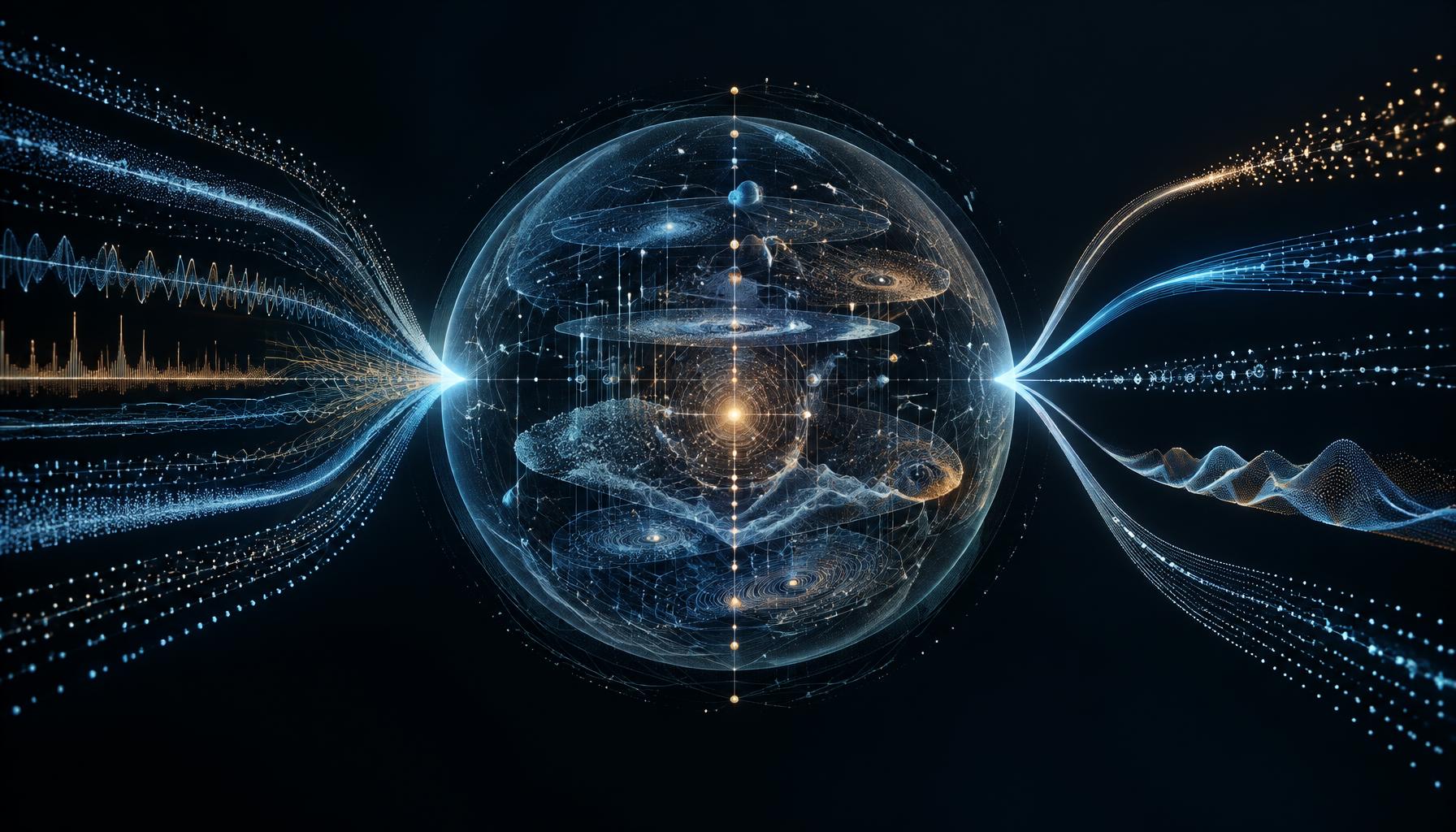
A real interior transformed into a structured spatial representation
Physical Space Intelligence

PhysenseAI

Physical Space Intelligence — enabling AI to understand what is happening inside a space

Sense
Reconstruct
Anticipate

Investor Deck · 2026 · PhysenseAI

02Vision — AI’s Next Frontier

Every Data Modality Creates Its Own Intelligence Layer

Text has LLMs. Images have Vision AI. The physical world still lacks an intelligence layer.

Text
Text
LLM
LLM
Mature
Image & Video
Image / Video
Vision AI
Vision AI
Mature
Physical Space
Physical Space
?
Missing
Still Missing

We are building the intelligence layer for physical space.

03Problem

Devices Report Signals. They Do Not Reconstruct Events.

Sensor events ≠ real-world events. The missing step is understanding.

Illustrative Data
Sensor Events · What Devices See
  • 02:10 · Bed pressure sensor → No pressure
  • 02:11 · Bathroom motion sensor → Occupied
  • 02:11 · Door contact → Open
  • 04:10 · Bathroom motion sensor → Still occupied

Discrete, unconnected and memoryless — able to trigger only isolated rule-based alerts

Sensor Event

Real-world Event
Real-world Event · What People Need to Know
  1. 01Resident leaves bed at night
  2. 02Enters the bathroom
  3. 03Remains in the bathroom for two hours
  4. 04A serious incident may have occurred

Continuous, contextual and time-aware — enabling meaningful risk assessment

What is missing is not more sensors, but the layer that turns signals into events.

04Why Now

Three Curves Are Converging Now

Mature sensors, accessible compute and rising Physical AI demand make this layer possible now.

01Sensor Saturation

Sensors Are Now Abundant and Affordable

Millimeter-wave radar, infrared, door contacts, pressure and environmental sensors are mass-produced and affordable enough for room-level deployment. Spaces no longer lack signals.

02Commoditized Edge Inference

Edge Compute Has Become a Commodity

Edge NPUs make continuous local inference practical. Raw data no longer needs to leave the premises, unlocking privacy-sensitive environments.

03Physical AI Paradigm

AI Is Moving Into the Physical World

Robots, embodied AI and intelligent buildings all need shared spatial context to act. This layer has yet to become infrastructure.

The window is open: signals are abundant, but understanding is still missing.

05The Missing Layer

We Build the Layer Between Devices and Applications

We build the intelligence layer every spatial application needs — not sensors, not a single application.

Application
Application Layer

Care · Robotics · Buildings · Security

Physical Space Intelligence
Spatial Intelligence Layer

Event reconstruction · Spatial state · Behavioral baseline

PhysenseAI
Connectivity & Data
Connectivity & Data Layer

Gateways · Protocols · Time sync

Sensing Devices
Sensing Device Layer

Radar · Infrared · Door contact · Environment

Traditional IoT Platform vs Spatial Intelligence
IoT PlatformPhysenseAI
Data formIndividual device readingsContinuously updated spatial state
Time dimensionA value at one momentContinuous events and history
Decision logicThreshold-based alertsComparison with historical baseline
OutputRaw data / reportsEvents, states and anticipation

Build the layer once, reuse it across every spatial application.

06Core Technology

An Eight-Step Reasoning Chain: From Signals to Action

The intelligence lives in the model and reasoning engine — independent of any hardware stack.

  1. 01

    Multi-source Input

    Any combination of sensors

  2. 02

    Signal Processing

    Denoising and timestamp alignment

  3. 03

    Spatial Representation

    Entities + space + time

  4. 04

    Event Reconstruction

    Discrete signals → continuous events

  5. 05

    Spatial State

    Who / where / doing what

  6. 06

    Behavioral Trace

    Activity changes over time

  7. 07

    Deviation Detection

    Compared with personal history

  8. 08

    Anticipation & Guidance

    Risk level + actionable response

Camera-free by design for privacy-sensitive spaces
On-device inference keeps raw data on premises
Change hardware without rebuilding the model; one core serves every scenario

The output is not a data point, but a continuously updated state of the space.

07Engine → Model

A Reasoning Engine Today.
A Learned Spatial Model Tomorrow.

We do not call a rules engine a foundation model. This is where we are today — and where we are going.

TODAY

Spatial Reasoning Engine

  • Multi-source fusion and event reconstruction
  • Rules + statistical models detect deviations
  • Explainable and auditable outputs
  • Light adaptation for each space
BUILDING

Behavioral Baseline Learning

  • Automatically learn a baseline for each person and space
  • Move from manual to self-learning thresholds
  • Recognize patterns across rooms and day/night cycles
  • Now validating with real device data
FUTURE

Learned Spatial World Model

  • Train on large-scale real-space data
  • Generalize directly to unseen spaces
  • Predict the next state, not just explain the current one
  • Become shared context for Physical AI

The path is clear: use the engine to access real spaces, then use real spaces to train the model.

08Behavioral Intelligence

The Real Value: Comparing Each Person With Their Own Baseline

Not one threshold for everyone, but each person compared with their own historical norm.

01

Event

One bed exit, one bathroom entry, one door opening

02

Event Sequence

Bed exit → bathroom → return to bed, with duration for each stage

03

Behavioral Baseline

How often this person rises at night, for how long, and how far

04

Deviation & Anticipation

Tonight deviates sharply from personal norms, triggering a risk level and recommended action

Note: The system outputs spatial states and risk signals to support alerts and response workflows. It is not used for medical diagnosis.

The same event can be normal for one person and a risk signal for another.

09Evidence

What Is Proven — and What We Are Validating

Everything below is verified on real devices. Nothing is claimed before it happens.

Verified
TODAY
  • Real-device ingestion verified: multiple sensor types feed one pipeline and produce stable event streams after timestamp alignment
  • Event reconstruction works: discrete signals combine into ordered spatial event sequences
  • Spatial state streams continuously: in bed, out of bed, bathroom occupied and vacant states update over time
  • Edge execution verified: inference runs locally without uploading raw data
In Progress
BUILDING
  • Self-learning personal baselines to replace manually configured thresholds
  • Stability and false-positive rates across multiple rooms and floors
  • Continuous overnight operation in real-world settings
  • On-site refinement of the live care-station dashboard and response loop
Simulated Scenarios = Logic Validation

Simulated data validates reasoning logic only; it does not represent field performance.

The engine works. This round is about continuous operation data from real spaces.

10Architecture

One Core, Open at Both Ends

Swap sensors on the input side or applications on the output side without changing the core.

Input · Any Sensor
Millimeter-wave Radar
Infrared / Motion
Door Contact / Switch
Pressure / Surface
Environmental Data
PhysenseAI Core
Input Adapter Layer

Any device; protocol and time alignment

Spatial Representation

Entity · Space · Time · State

Reasoning Engine

Events · Baseline · Deviation · Anticipation

Outputs & Subscriptions

Events, states, risk levels and recommended actions

Output · Any Application
Care Operations Dashboard
Mobile Alerts
Robotics / Embodied AI
Building & Energy Systems
Third-party APIs

Hardware and applications will change. The spatial intelligence layer compounds over time.

11Beachhead

Start With One High-Value Space: Senior Care Facilities

Not because care is our only market, but because it proves the value of spatial intelligence fastest.

01

High Value

Nighttime falls and bathroom overstays carry severe human and liability costs

02

High Frequency

The workflow runs every day and night, making value continuously visible

03

Privacy Critical

Cameras are unsuitable in bedrooms and bathrooms; non-visual sensing is essential

04

Context Dependent

Whether a signal indicates risk depends entirely on the person’s normal behavior

Deployment Path
Bedroom
Bathroom
Common Area

Capabilities proven here transfer directly to other spaces.

12First Product

AI Spatial Care System

Camera-freeEdge Inference

Customers are not buying sensors. They are buying a clear, live understanding of what is happening across the building.

Live Care StationNight Mode · 04:10
NormalWatchAlertIllustrative
Building A
  • 3F · 12 Rooms
  • 2F · 12 Rooms
  • 1F · 10 Rooms
Building B
  • 3F · 12 Rooms
Building A · 3F Status
301
In Bed
302
Bathroom 2h00m
303
In Bed
304
Out of Bed 6m
305
In Bed
306
In Bed
307
Bathroom 4m
308
In Bed
Alert Queue
  • 302Bathroom overstay 2h00m
  • 304Out of bed 6m at night
  • 307Bathroom occupied, normal range

Night bathroom stay > 15m → Watch; > 30m → Alert

Room 302 · Event Trace
02:10Out of Bed
02:11Enters the bathroom
02:26Stay exceeds 15m night threshold
04:10Still inside; abnormal overstay

Notification path: Staff dashboard → Mobile push → SMS escalation after 5m without response · Sense → Understand → Alert → Respond

From “an alarm went off” to knowing where to go and what to do.
13Go To Market

Who Buys, Who Signs, and How We Enter

Prove the overnight response loop on one floor, then expand by building and portfolio.

Target Customers

Target Customers

  • Mid-to-large senior care facilities
  • Integrated care and rehabilitation centers
  • Premium communities and home-care providers
Decision Makers

Decision Makers

  • Facility director / COO: liability and reputation
  • Head of care: night staffing and response efficiency
  • IT lead: integration with existing systems
Entry Motion

Entry Motion

  • Pilot one floor, priced per room
  • Prove the overnight response loop and false-positive rate
  • Expand building-wide, then across the operator’s portfolio

The buyer is clear. This round is about securing the first referenceable pilots.

14Business Model

Project → Product → Platform

Use projects to access real spaces, turn capabilities into a product, then build a platform.

TODAY
Project

Project Delivery

  • Deploy by facility and price by room
  • One-time deployment fee + annual service fee
  • Gain access to real spaces and real data
BUILDING
Product

Standard Product

  • Standard hardware kit + software subscription
  • Shorter deployments and higher gross margin
  • Repeatable through channels and integrators
FUTURE
Platform

Capability Platform

  • Spatial intelligence delivered via API
  • Robotics, buildings and security pay per call
  • Revenue decouples from deployment labor

Each stage compounds the data and reusable capabilities needed for the next.

15Generalization

One Core, Multiple Spaces

Scenarios and thresholds change. The core remains: events, states, baselines and deviations.

PhysenseAI Core
Spatial Intelligence Layer
  • Event Reconstruction
  • Spatial State
  • Behavioral Baseline
  • Deviation & Anticipation

Care Spaces

Care

Night bed exits and bathroom overstays · Fall-risk alerts and care-round dispatch · Long-term mobility changes

Buildings & Energy

Buildings

Adjust HVAC and lighting to actual occupancy · Space utilization and workstation analytics · Reduce energy automatically in vacant areas

Security & Industrial

Security & Industrial

Loitering in restricted areas · Worker safety state in operating zones · Abnormal routes and timing

More spaces make the same core stronger — that is what defines a platform.

16The Flywheel

Two Flywheels Converge on One Outcome

The business flywheel wins spaces; the intelligence flywheel turns spaces into capability. Both drive More Real Spaces.

Business Engine

  1. 01Deploy one space
  2. 02Close the response loop
  3. 03Renew and expand
  4. 04Access more spaces

Intelligence Engine

  1. 01Real-space data
  2. 02Iterate baselines and models
  3. 03Fewer false alerts / better anticipation
  4. 04Faster delivery
More Real SpacesMore real spaces = stronger models = lower delivery cost

Data use: customer data improves models only with explicit authorization and data minimization; raw signals remain on premises by default.

Spaces create the model. The model makes it easier to win more spaces.

17Physical AI

Robots Need the Context They Cannot See

We do not build robots. We provide the environmental context they lack.

A service robot’s limited view is completed by environment-level spatial context
Robot's Own Perception

The Robot’s Own View

  • Sees only a small area directly ahead
  • Cannot see behind walls or into adjacent rooms
  • Has no memory of the space
Environment-level Context

Environment-Level Spatial Context

  • Live state of the entire floor
  • Who is where and what just happened
  • Which areas should not be entered now

Spatial context will become shared infrastructure for embodied intelligence.

18Market & Moat

Three Market Layers. Three Layers of Moat.

No speculative bottom-up TAM. Only directional anchors supported by public data.

Entry

Senior Care Spaces

Room-based care systems

TODAY

Cross-Device Event Reconstruction

Align multi-vendor signals into usable event streams.

Expansion

Buildings · Security · Industrial

One core, adapted by scenario

BUILDING

Continuous Behavioral Data From Real Spaces

Real-world data cannot be bought; it must be earned through deployment.

Platform

Physical AI Context

Used by robots and embodied AI

FUTURE

A Context Interface Applications and Robots Depend On

Once systems depend on the context layer, switching costs are substantial.

Public Data Anchors
IoT AnalyticsConnected IoT devices keep growing; hardware is no longer the bottleneck
IFRService robot deployments are rising, creating demand for environmental context
IEABuildings consume significant energy; occupancy-based control is the direction

The moat is not one algorithm. It is the number of real spaces.

19Team · Roadmap · Financing

Team, Roadmap and This Round

This round has one clear goal: turn the engine into a system that runs continuously in real spaces.

Team
Yang Li · Founder

Product definition, spatial intelligence solution and commercialization

CTO · Hiring

Technical leader in spatial perception, heterogeneous sensor fusion and temporal intelligence; responsible for the core system from multi-source physical signals to event reconstruction, spatial state and behavioral reasoning, advancing it from prototype to real-world deployment and learned models

Roadmap
  1. NOW

    Engine operational; real-device data ingestion verified

  2. 0–6 Months

    First facility-floor pilots; overnight response loop live

  3. 6–12 Months

    Self-learning baselines live; false-positive rate and response time become delivery metrics

  4. 12–18 Months

    Standardize the product; validate a second vertical in buildings or security

Financing
Angel / Seed
USD 1.4M
  • 40%
    R&D & Models

    Reasoning engine, baseline learning and edge deployment

  • 35%
    Deployment & Delivery

    Pilot rollout, field refinement and delivery engineering

  • 25%
    Team & Operations

    Complete the core technical and delivery team

This round will deliver the first systems that run continuously in real spaces and can be formally accepted.

Physical Space Intelligence

Give AI an Understanding of What Is Happening in Physical Space

We are not adding more sensors. We are building the capability for AI to understand physical space.

One Core
Multiple Spaces
Enable AI to Act
PhysenseAIYang Licontact@physense.world